

Behavioral finance is an economic theory that challenges the psychological influences and learned biases that affect financial behavior and guide investment decisions. These subconscious emotional drivers often prompt investors to make risky choices, reject new information and hesitate unnecessarily, all of which affect market outcomes.
Those with an interest in behavioral finance—like private market investment management professional Celestin Pepin—understand the importance of applying it to traditional financial decision-making. However, others reject the idea that financial participants are not always rational and are instead influenced by their own psychologies. This limits behavioral finance and its critical reach. For more information, see the embedded PDF.
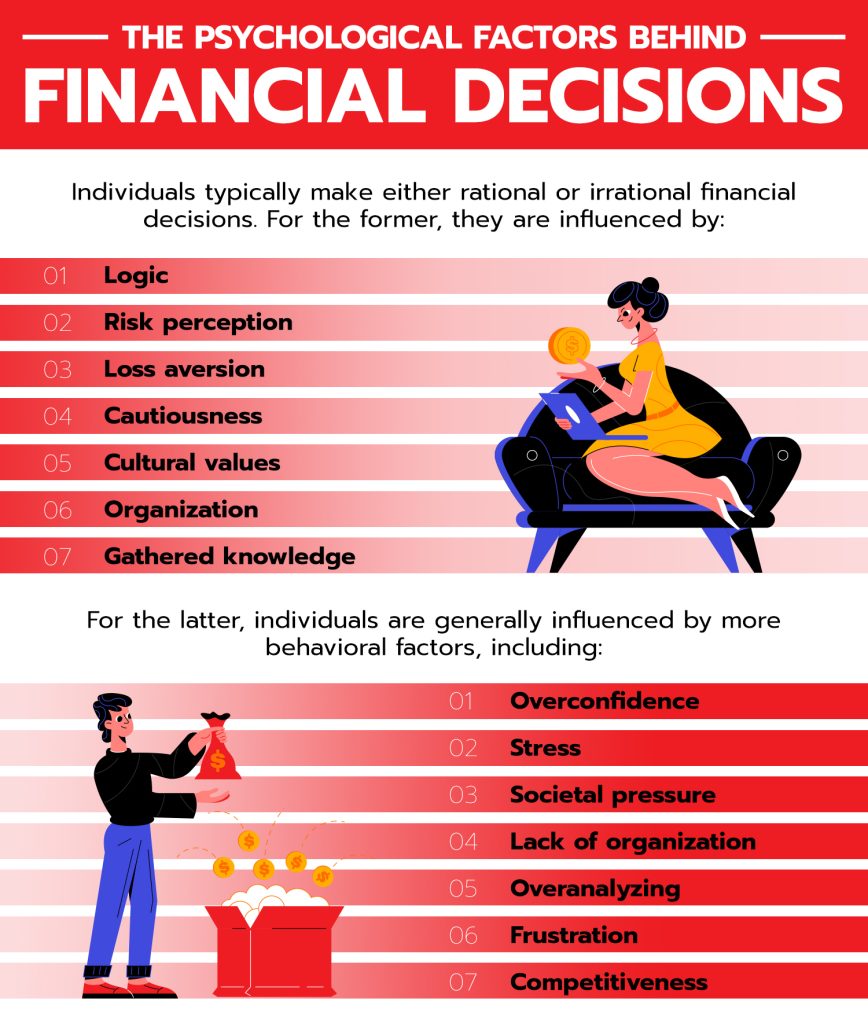
Behavioral finance encompasses several highly-influential psychological biases that affect decision-making. For instance, some investors are wedded to information or techniques that previously paid off, causing them to reject alternative approaches, whereas others overestimate their abilities and either make hasty investments or cling to losing assets.
It’s natural to feel emotional when making such big decisions, but too much behavioral influence causes investors to become irrational. Behavioral finance challenges them to acknowledge their biases, including risk tolerance, focus on long-term goals over short-term losses, and better educate themselves on how financial markets work.
The investment markets are directly impacted by psychological factors that guide individual and group decision-making. Per Yale’s School of Behavioral Finance, it’s important to understand investor assumptions and then challenge them, such as by interpreting high stock prices as being due to people overreacting and investing irrationally instead of them simply becoming more risk-averse.
Recency bias is also a huge obstacle for behavioral finance because it limits individuals’ ability to think long term. Everybody is too focused on the current market to entertain other ways of thinking, and it causes them to reject both the history of the stock market and its future as shaped by investor decisions.
Human behavior is inherently unpredictable, so an ever-fluctuating market is inevitable. But behavioral finance challenges investors to address their emotional reactions, which can be as simple as being upset by a recent loss, and consider how much they affect future investments. People would often prefer to have their biases confirmed and their confidence validated instead.
Statistically, investors who understand and embrace behavioral finance avoid long-term losses, even if it means being more patient in the present. Everything from fragile risk tolerance to the need to see a return influences financial decision-making, but these psychological factors can derail portfolios without proper application of behavioral finance.
